consumption & why it's misogynistic
clean girl, european girl summer, coastal granddaughter, downtown girl, office siren, vanilla girl, star girl, coconut girl, blokette, coastal cowgirl, tomato girl, messy french girl, ocean girl ...

From women finally gaining their individual power over money and taking control; to then only realise, it is now being used against us. Women control over $31.8 trillion in worldwide spending. By 2028, women across the globe are projected to own 75% of discretionary spending, according to Nielsen.1
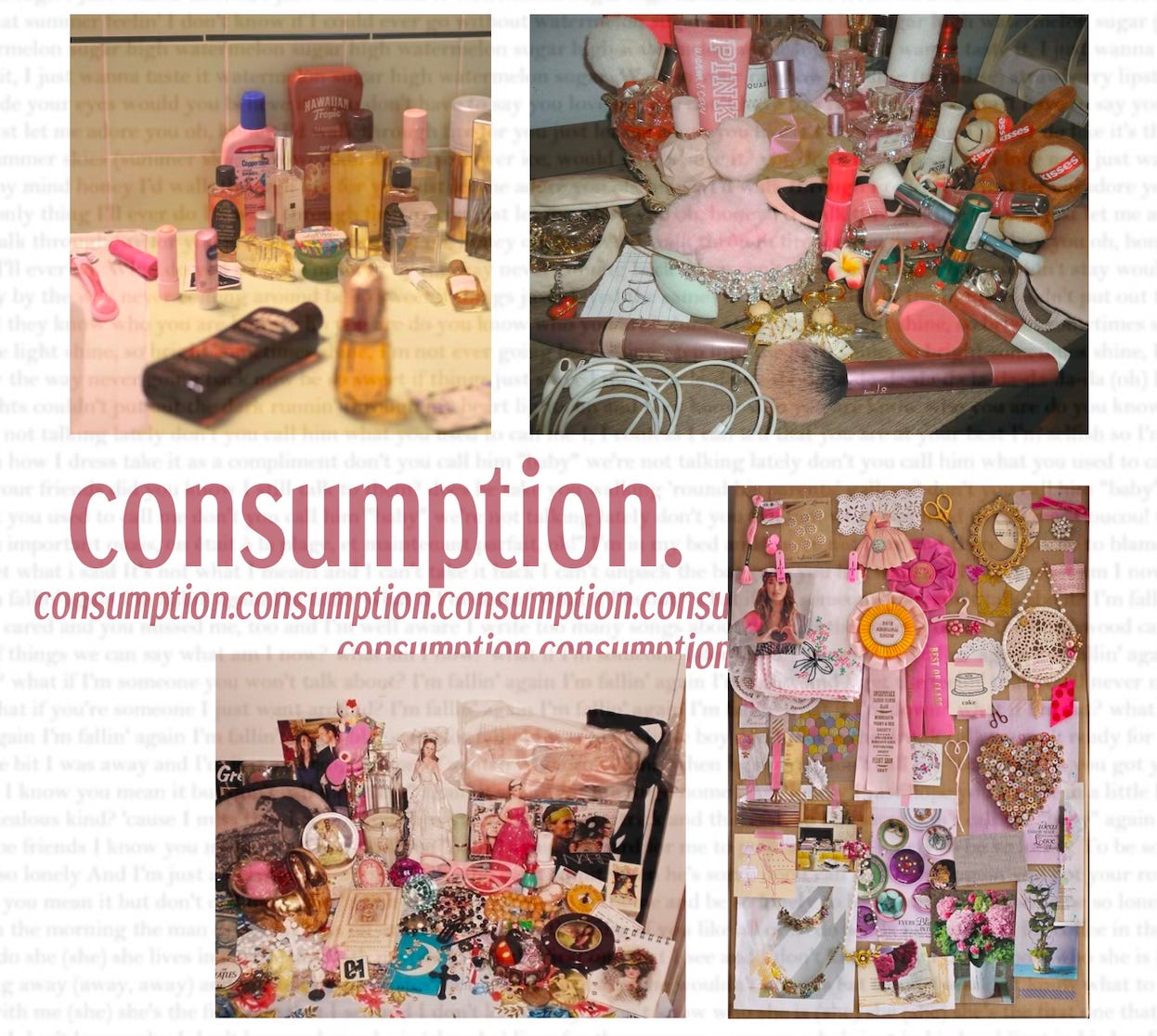
#tiktokmademebuyit
We can’t talk about (over)consumption and its effects on women without considering micro-trends. From ‘strawberry girl makeup’ to ‘coconut girl summer’ to the rise and fall of ‘e-girls’ to ‘clean girls’. And I can’t help but wonder2, how many of these trends have been directed towards men? How many articles have been written about men and ridiculous micro-trends?
confessions of a shopaholic
I don't want to think about the amount of money I have spent on things that have been dangled in front of me. In fact, as I’m writing this, I’m looking at a shelf dedicated to skincare products that were supposed to change my life and make me have that ever-so-wanted ‘glass skin’. I won’t tell you that I haven't fallen victim to the persuasive power that companies and influencers hold over us, because truly? I don’t think anyone is above it. And this is not to say falling into this doesn’t make you any less feminist than the other person, because it’s becoming inescapable. Especially with the rise of fast fashion.
Nowadays, I try not to buy from unethical brands (which is extremely difficult) but not everyone has that privilege to do so. Fast fashion is an inexpensive, quick and easy way to slot right into the current micro-trends that pollute our social media pages. For example, the Shein business model revolves around low-cost, throwaway items that are constantly being marked down, with roughly 10,000 new products released per day.3
so, why do i shop so much?
Maybe this is controversial - but it’s not women’s fault to fall into this trap of ‘girl-power consumerism’. I hate the argument of ‘how did we fall for this’ - how could we not? If you’re fed something every single day and have been raised and socialised to believe certain standards, how could we not? This isn’t an easy trap that we can easily release ourselves from - we have been interwoven with the rise of consumerism and women’s independence. Femininity is being commodified. Unrealistic body standards, lifestyles and aesthetics constantly being projected makes women feel like they are constantly striving for ‘greatness’ when in reality, photoshop and small captures of one’s day are simply unattainable. Capitalism thrives off of women’s insecurity, pressures and unrealistic ideals. Women have unknowingly bought into commodities and commodified themselves under patriarchal standards that are embedded in capitalist and consumer culture (Dimulescu, 2015).
so, why do i spend so much?
Not only do we buy more than we need as we’ve been told ‘this one will work this time’, but let’s look at the every-day ‘maintenance’ of being a woman.
Pink Tax: The Pink Tax refers to the phenomenon of gendered pricing, in which items targeted or marketed towards women having a higher cost than comparable products targeted towards men.
But this isn’t just limited to women’s essential items. It also impacts women’s healthcare. A survey commissioned by Deloitte found that women in the UK are spending £1.5 billion more than men on medical-related expenses each year. The survey, titled Women’s Health Cost Gap in the UK, found that 52% of employed women spend out-of-pocket on health each year, versus only 39% of men. Women also spend more on categories of out-of-pocket spending, including fertility, menopause and menstrual health.4
Not only does the ‘Pink Tax’ affect the amount of money spent by women, but also brands not catering to all women. According to Treasure Tress’ trend report, 47% of black British women with textured hair do not feel as though any of the top 10 haircare companies -including Garnier, Herbal Essences, L’Oreal, Head & Shoulders, Dove and Neutrogena - cater to their hair type.
In the western world, black women are the biggest consumers of hair care products, spending, as Mintel reported in 2020, $1.7 billion on hair care products. In the UK, Black British women spend £168 million a year on hair products and account for 10% of the UK’s hair care spend yet make up just 2% of the UK’s adult population.5
So, not only are women forced to spend such extortionate amounts of money to maintain their femininity, they spend it out of pride and necessity.
my conclusion …
It seems as though women are always fighting a losing battle (what’s new?) and we will forever be running ourselves in circles. So, yes overconsumption is bad and I think it is inherently misogynistic since it had thrived off of women’s own struggles and insecurities, but do I think women are at fault? No. Yes, we could choose more ethical brands whilst we shop but at the end of the day, it is the patriarchy that fuels us to spend.
https://www.linkedin.com/pulse/she-economy-women-driving-force-behind-consumer-masse-nguyen#:~:text=Women%20control%20over%20%2431.8%20trillion%20in%20worldwide%20spending.&text=Daily%2C%20women%20spend%20more%20time,through%20buying%20power%20and%20influence.
https://i.pinimg.com/originals/0b/04/81/0b04811c47c7dd1119ab6407d7f26883.jpg
https://www.independent.co.uk/life-style/shein-missguided-fast-fashion-b2439035.html#:~:text=The%20Shein%20business%20model%20revolves%20around%20low%2Dcost%2C%20throwaway%20items,new%20products%20released%20per%20day.
https://www.fidelity.co.uk/women-and-money/pink-tax/
https://www.refinery29.com/en-gb/black-haircare-texture-tax-cost-of-living#